
Concrete retaining walls in Oxford AL - a wall that drains and holds its line
Soil creeping down a slope or a wall leaning out? We build poured concrete walls with a real drain behind them, so they stay put.
- Fully licensed and insured.
- Free quotes on site.
- Replies within 1 business day.
Do I need a concrete retaining wall for my slope?
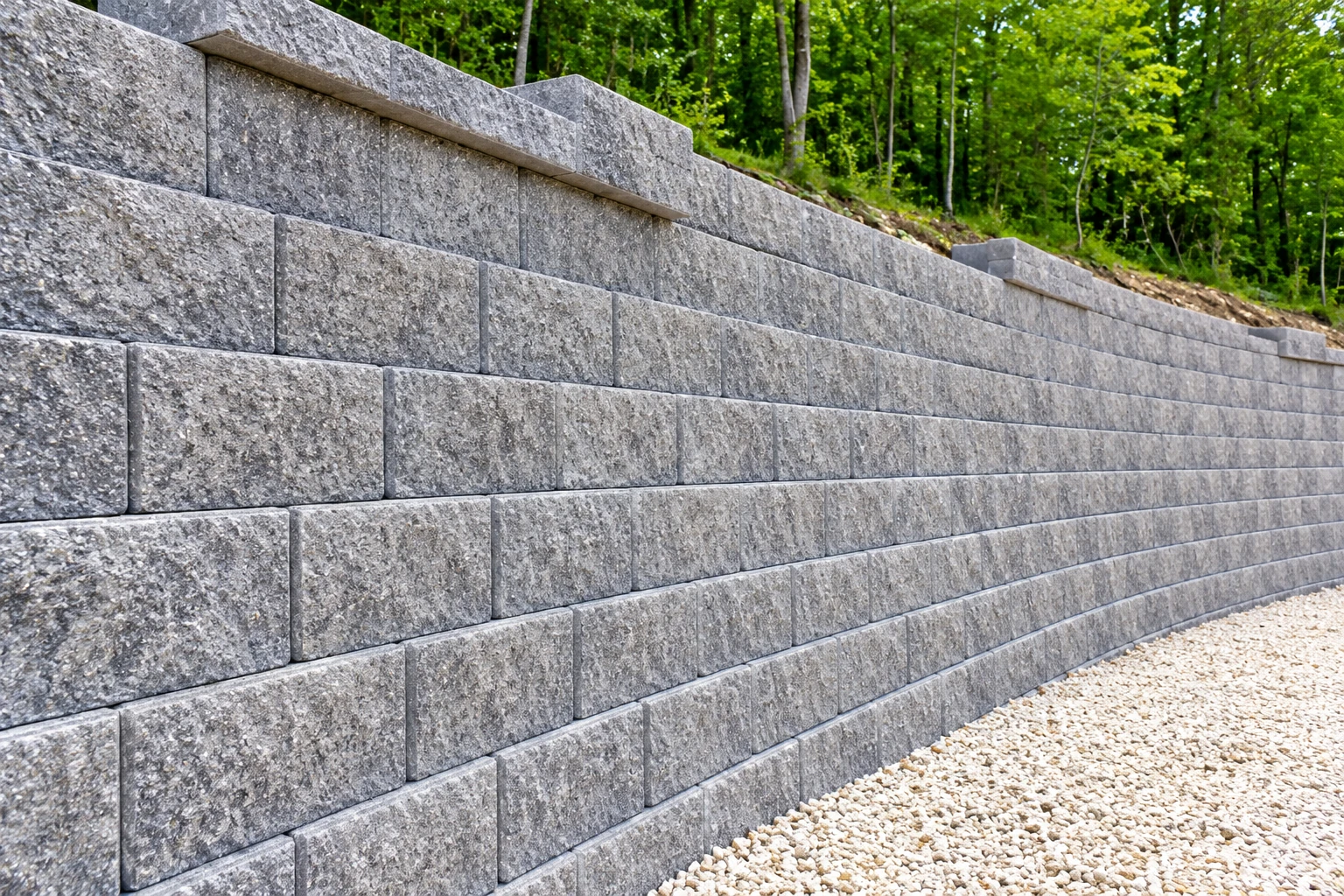
A concrete retaining wall in Oxford, AL is a poured, steel-reinforced wall that holds a slope back so the yard above stays put, with weep holes, small openings through the face, letting water out of the soil right behind it.
Usually it starts with a bank that sheds dirt every time it rains, a yard too steep to use, or an old wall that's starting to lean. What moves the price is how tall and long the wall runs, how much soil it holds back, what sits on the ground above it, how the water gets out, and how easy it is to get equipment to the spot, plus anything that has to come out first, like an old wall or a slab we need to cut through. The schedule mostly turns on the weather for the pour and the time the concrete needs to cure, the wait while it hardens enough to take the soil's push, and your estimate lists what's in the price and what isn't, so you can see where the money goes.
How do you know a slope or retaining wall needs work?
Wall leaning at the top
If the top of an old wall has tipped out past the bottom, the soil behind it is pushing harder than the wall can take, often because water has built up back there. Left alone, a lean usually keeps growing, and a wall you could have fixed turns into one you have to replace.
Damp band or white crust
After rain, a dark damp strip along the lower face, a white salty bloom or rust-colored streaks under the weep holes all point to water sitting behind the wall instead of getting out. That water adds weight and pressure every storm, so it's worth sorting out the drainage before it starts the wall moving.
Bank washing onto your yard
A slope with no wall that drops mud on the driveway or patio after every heavy rain is losing ground a little at a time. The longer it goes, the more fill it takes to rebuild the slope before a wall can go in.
How we build a concrete retaining wall
Before I talk about concrete at all, I look at where the water goes, because a wall only stays put if the water behind it has a way out. Then I size up how much soil it'll hold back and what sits above it, like a driveway, a fence or a parking spot, and that's what tells me whether poured concrete is right or something else would serve you better. When poured is the answer, we dig out and pack the ground for the footing, the wide base the wall stands on, set forms and tie in rebar, steel bars that let the wall take the soil's push, then pour with weep holes through the face, let it cure, and backfill behind it with the drain in place.
A wall usually makes room for something else, so we plan it with whatever goes next to it. Leveling a slope can give you flat ground for one of our concrete pool decks, and when a wall opens up space for a building or a lower room, concrete floor installation gives it a slab, with the water steered away from both.
Low wall along a bed or walk
This suits a short bank that crowds a walkway, a patio edge or a garden bed with nothing heavy above it. It's the simpler build, though it still needs a way for water to get out from behind it.
Taller wall under a load
This is for a real slope, or a wall with a driveway, a building or parked cars on the ground above it. That's where the steel inside and the drainage plan matter most, and where poured concrete earns its cost.
Get a free on-site estimate for your retaining wall
Send the form and we'll get back to you within one business day to set a time. I'll come walk the slope with you, and the estimate is free, with no pressure and no obligation.
(256) 649-5980- Based in
- Oxford, AL 36203
- Hours
- Mon–Fri: 6 AM–9 PM, Sat–Sun: 8 AM–10 PM
What happens when you call about a retaining wall in Oxford?
Here's how a retaining wall goes from your first call to the last walk-through, and who you'll be dealing with at each step.
Call or send the form
Call (256) 649-5980 or send the form, and we get back to you to set a time that suits you. It helps to know roughly how tall the bank is and what sits above it.
Walk the slope with me
I come out, walk the site with you and ask a lot of questions about the soil, the load above and where water runs now. You then get an estimate that lists what's in it and what isn't, so there's nothing hidden to find later.
Prep, pour and walk through
If you go ahead, we prep the ground and set the forms, and I'm on site for the pour. When it's done, we walk the finished wall with you before we leave and show you the weep holes to keep clear.
Why Oxford homeowners call us about retaining walls
The owner on every job
I come out to look at every job myself and stay on it with the crew that does the work. The person who asked about your slope at the estimate is the same one standing there on pour day.
Taking on slopes with a catch
I learned concrete on a crew years ago and came back to start this business in 2023, and we're best known for jobs with an awkward slope, an old slab to cut through or a layout that isn't standard. If a bank behind your house has put other contractors off, it's the kind of job we like working out.
Licensed and insured for Alabama work
We're fully licensed and insured. In Alabama, the Home Builders Licensure Board licenses residential builders, and its rule covers work on a residential structure costing over $10,000, labor and materials included, unless the work falls outside the board's reach, so it's fair to ask anyone bidding your wall where they stand.
Tell me how tall your bank is and what sits on top of it, then send us your details or call (256) 649-5980 and I'll come walk it with you.
Planning a retaining wall and the ground around it in Oxford
Whether your wall needs a permit isn't something I'll guess at, because Oxford sends questions about how its codes apply to a job to the Building Official. We check with the local building office about each job before work starts, and I'll tell you plainly what yours needs and who handles it.
Calhoun County's soil is mostly rated low for shrink and swell, which helps a wall, but that's a countywide figure and your backyard can still hold a pocket of clay, so I look at your own ground at the estimate. The city says to call 811 before you dig, so buried lines get marked before we open a trench, and it expects construction debris hauled off since the Street Department won't pick it up, so we take ours with us. We see the same mix of sloped lots and tired old walls on jobs in Anniston and Jacksonville.
Questions about retaining walls in Oxford, AL
Is a poured concrete or block retaining wall better for my yard?
For a garden-height wall, stacked block usually wins on cost and flexibility, but once the wall needs steel inside it or has weight on the ground above, like a driveway, poured concrete is the better choice. The deciding questions are how much soil it holds, what sits above it and who's building it, and I'll tell you at the estimate if block makes more sense for your slope.
How long will a concrete retaining wall last?
A wall with a working drain along its footing and clear weep holes usually holds its line for decades. One backfilled with clay and no way for water to get out can start shifting within a few freeze-thaw cycles, so ask every bidder how they plan to drain the wall. Our work is backed by our satisfaction guarantee.
How much does a concrete retaining wall cost near Oxford, AL?
A poured concrete retaining wall about 3 feet high usually runs about $33 to $36 per square foot in the Anniston area, materials included. That's the going rate around here, not our quote, and height, drainage, access and what has to come out first all move it, so your estimate spells out what's in your price and what isn't.
What should go behind a concrete retaining wall?
Drainable granular fill, like gravel, usually goes behind it, because clay soils are hard to drain once they're soaked and push harder on the wall. Wall designs almost always call for it, so if two bids are far apart, compare what each one puts behind the wall.
How do I keep retaining wall weep holes from clogging?
A layer of gravel wrapped in filter fabric behind the weep holes keeps fine soil from washing in and plugging them. Without it, a wall built to drain can quietly stop draining, so it's one of the first things I'd ask any contractor about, and keep mulch and dirt from piling up over the openings.
What causes a retaining wall to lean?
Most of the time it's water sitting behind the wall, adding weight and pushing the soil harder than the wall was built to hold. A heavy load above that wasn't planned for, like a driveway or parked cars, does the same, and a leaning wall rarely straightens on its own, so it's worth having someone look before the next wet season.
Concrete work that often goes with a wall
Concrete pool decks
If your slope is the reason the pool area feels cramped or floods after rain, a level deck beside a new wall gives you flat, dry ground.
Concrete floor installation
When a shop or garage sits low against a bank, a new concrete floor gives you a level slab the wall keeps soil and water off.
Cities where we build retaining walls
Oxford Concrete is based in Oxford, Alabama, and we build retaining walls in Oxford and many of the cities around it. Ten of them have their own page here, including Southside and Lincoln, and if your city isn't listed, call and ask.
Oxford, AL
Have the owner walk your slope
If you can, call after a good rain, while the wet spots and runoff paths are still easy to see on the bank.